

How Hookah Base Geometry Shapes Use, Balance, and Perception
Core Keywords: hookah base geometry, base stability design, internal water volume
In modern hookah setups, geometry is rarely discussed directly—but it defines nearly every physical interaction. Hookah base geometry determines how a base sits on a table, how water behaves during use, and how the entire piece feels when assembled. From round silhouettes to angular or faceted forms, geometry quietly governs stability, comfort, and visual weight. As hookah use expands across lounges and home interiors, understanding geometry has become a practical requirement rather than a design curiosity.

- What is the most important aspect of hookah base geometry? Hookah base geometry primarily governs base stability design, ensuring the hookah sits securely without wobbling, and influences the functional internal water volume for optimal cooling and airflow.
- How does shape affect stability? A wide, flat footprint and a low center of gravity—key elements of good base stability design—make a hookah much more resistant to tipping, regardless of its decorative style.
- Why is internal water volume important? The internal water volume defined by the base's shape determines water cooling capacity and affects draw smoothness and bubble diffusion during the session.
Hookah Base Geometry Starts With Balance and Contact
At the most basic level, hookah base geometry controls how weight meets the surface. A wide footprint improves balance, while tapered or stepped profiles redistribute mass vertically. This is the foundation of base stability design—reducing wobble when hoses are pulled or when the setup is repositioned. Bases with poor geometric balance often feel unstable even if they are heavy, proving that weight alone cannot replace thoughtful geometry.
Internal Water Volume and Its Functional Role
What happens inside the base is just as important as what we see outside. Hookah base geometry defines internal water volume, which influences cooling efficiency, splash behavior, and draw consistency. Wider internal chambers allow water to settle calmly, while narrow or sharply angled interiors may increase turbulence during purging or movement. Experienced users often notice that changes in internal water volume affect session smoothness more than external decoration.
Geometry as a Visual and Spatial Signal
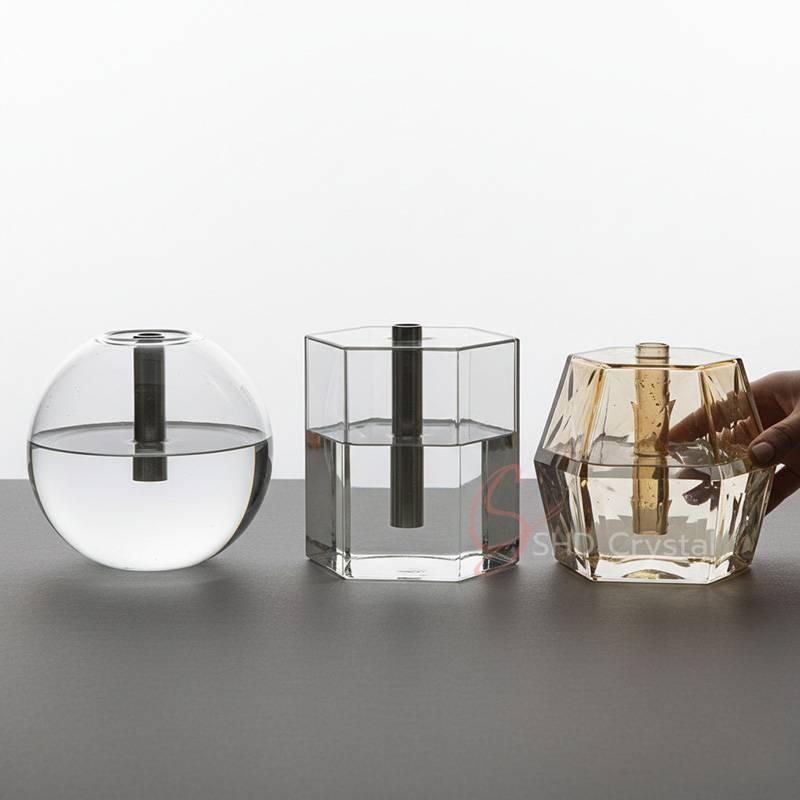
Beyond function, hookah base geometry communicates presence. Tall, narrow profiles feel elegant and lightweight, while broader shapes feel grounded and authoritative. Angular bases read as modern and architectural; rounded forms feel traditional and familiar. These perceptions directly affect buying decisions, especially in lounges where base stability design must coexist with interior styling. Geometry helps the hookah either blend into a space or stand out as a focal point.
Why Geometry Matters in Commercial Environments
In lounges, consistency is operational value. Repeating the same hookah base geometry across tables creates visual order and simplifies staff handling. Shapes that support reliable base stability design reduce accidental tipping and service interruptions. At the same time, predictable internal water volume helps staff maintain consistent water levels across sessions, improving repeatability without constant adjustment.
Consumer Feedback: What Users Actually Notice
User feedback often describes geometry indirectly. People say a base “feels solid,” “looks expensive,” or “sits confidently.” These impressions almost always trace back to hookah base geometry—how evenly weight is distributed, how flat the base sits, and how water behaves inside. Many users also appreciate shapes that offer better grip during cleaning, again linking geometry to everyday usability rather than abstract design.
FAQ About Hookah Base Geometry
- Does geometry matter more than material alone? Yes. Geometry determines balance and water behavior even when material quality is high.
- Can angular bases be as stable as round ones? Yes, if the footprint and weight distribution support proper base stability design.
- How does geometry affect cleaning? Faceted shapes may need light brushing, while smooth curves rinse more quickly.
- Is internal water volume fixed by size? Not entirely—shape strongly influences usable internal water volume.
- Why do some bases feel more “premium” instantly? Well-balanced geometry creates visual and physical confidence.
Crafting Geometry With SHD Crystal
Executing precise hookah base geometry requires controlled shaping, symmetry, and consistent wall thickness. SHD Crystal supports brands with hand-crafted glass forming, repeatable geometric profiles, and refined finishing that preserves clarity and proportion. Their production approach ensures that base stability design and internal water volume behave consistently across batches, helping brands turn geometric concepts into reliable, scalable products.
Contact us now to get the latest e-catalog of hookah products!
Master the fundamentals of form and function. Partner with SHD Crystal to develop hookah bases where expert hookah base geometry, reliable base stability design, and optimized internal water volume come together for superior performance and aesthetics.
Request Geometric Design Consultation