

The History of the Nargile: From Ancient Ritual to Modern Social Art
Core keywords: history of the nargile, Middle-Eastern hookah culture, traditional hookah rituals
FAQ Quick Guide:
A: The history of the nargile traces back over 500 years to Mughal India and Persia, where it began as a simple water filtration device using a coconut shell, bamboo stem, and clay bowl, evolving into a central element of traditional hookah rituals.
A: During the Ottoman Empire, the nargile was refined into an artistic object and became deeply embedded in social customs, forming the foundation of modern Middle-Eastern hookah culture centered on hospitality, conversation, and craftsmanship.
A: While materials and technology have modernized, the core social ritual of sharing a nargile remains. Contemporary lounges globally preserve the essence of traditional hookah rituals, adapting the practice for new generations while honoring its historical roots.
For centuries, the history of the nargile has reflected the broader narrative of human cultural development—a story intricately woven from ritual, artistry, and social connection. From its sacred origins in ancient Persia and India to its current status as a worldwide symbol of leisure, the nargile demonstrates how tradition can adapt across ages while preserving its fundamental spirit. Its journey reveals not only the history of the nargile but also the enduring human inclination to gather, share, and find significance in deliberate, shared moments.
Chapter 1: Origins — A Sacred Ritual of Purification
The history of the nargile extends back more than five centuries across the cultural spheres of Mughal India and Persia. In its earliest incarnation, the nargile—or hookah—was a simple yet profound apparatus. Early practitioners utilized a coconut shell filled with water, a bamboo stem, and a small clay bowl to cool and filter tobacco smoke. This act of water filtration was both practical and symbolic; the rising smoke was perceived as a conduit between the earthly and the divine, reflecting traditional hookah rituals that emphasized purification, contemplation, and spiritual connection.
When this concept migrated to Persia, it acquired deeper cultural resonance. There, the "nargile," derived from the Persian word nārgil (meaning coconut), became integrated into daily social and intellectual life. It transitioned from a solitary meditative practice to a communal experience enjoyed by scholars, poets, and rulers, thereby laying the essential groundwork for the rich tapestry of Middle-Eastern hookah culture.
Chapter 2: The Ottoman Era — The Golden Age of Refinement
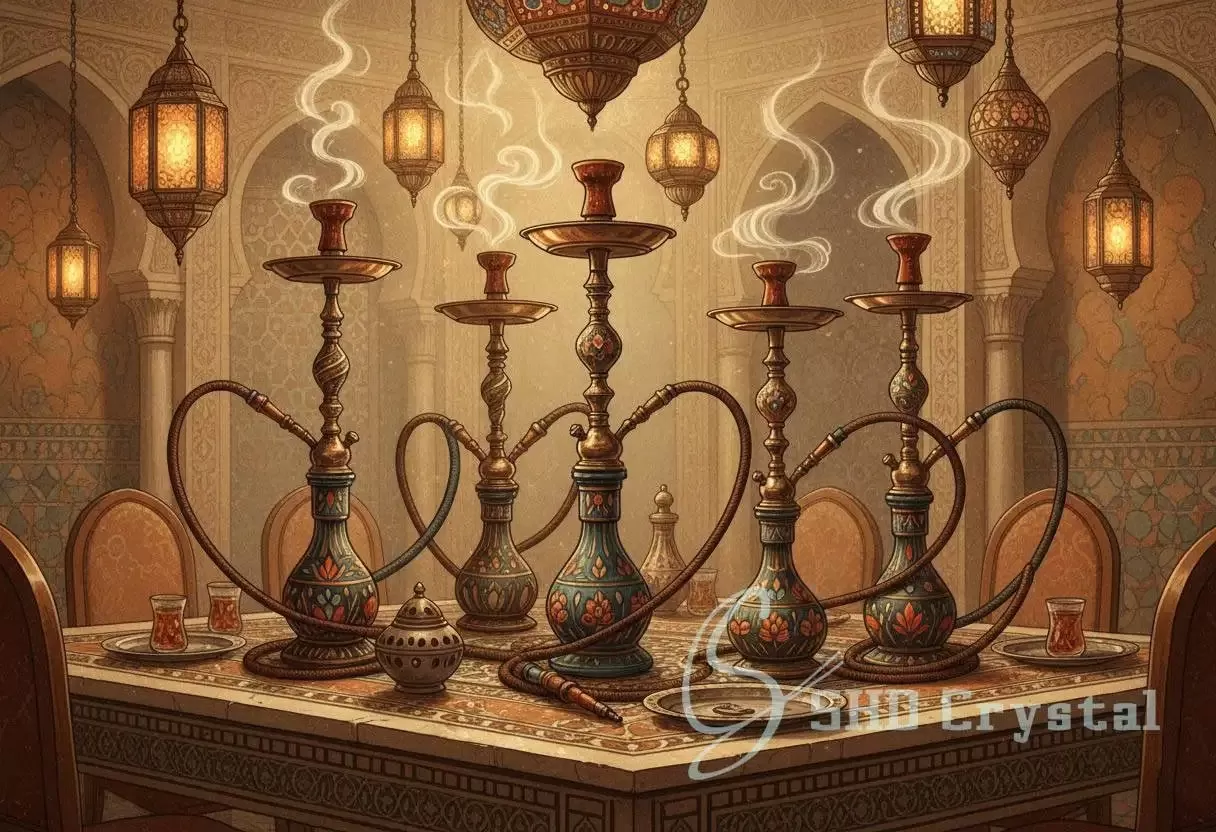
As trade routes expanded, the nargile found its most iconic expression within the Ottoman Empire. By the 17th century, it had evolved into a central symbol of sophistication and hospitality across Turkey and the Levant. Ottoman master craftsmen transformed the basic design into exquisite works of art, featuring hand-blown glass bases, intricately engraved metal stems, and elegantly covered hoses.
The history of the nargile during this period is equally a history of unparalleled artistry. Each piece reflected the owner's status and aesthetic sensibility. In the coffeehouses of Istanbul and the salons of palaces, the nargile transcended its function as a smoking device to become a cultural statement embodying patience, respect, and refined taste. The act of serving a nargile to a guest was a gesture of high honor. Within these spaces, traditional hookah rituals reinforced core social values of hospitality and meaningful, protracted conversation—elements that continue to define Middle-Eastern hookah culture to this day.
Chapter 3: Journey to the West — Symbol of Exoticism and Leisure
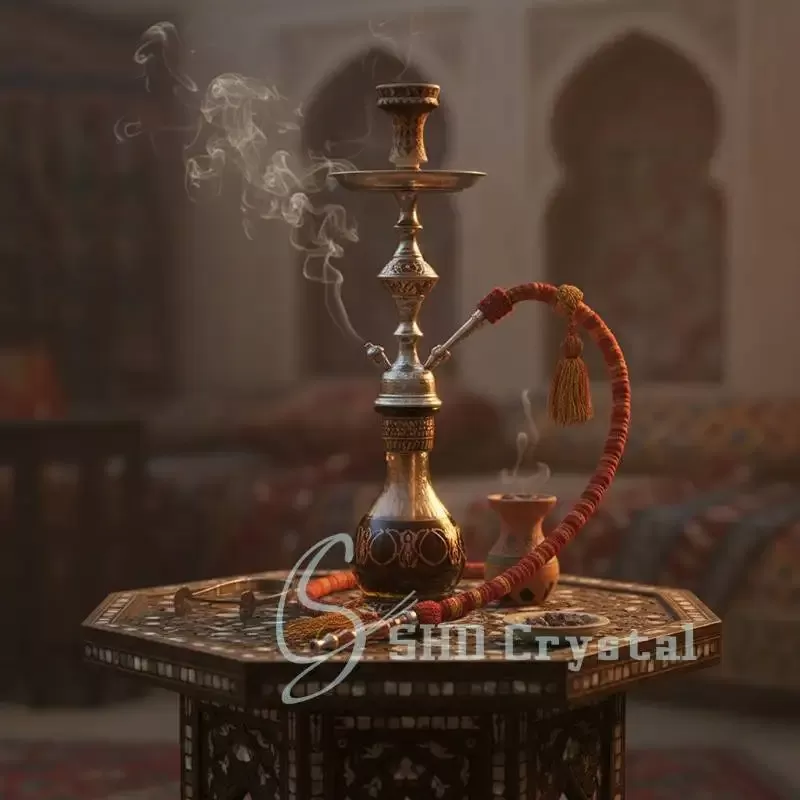
During the 18th and 19th centuries, European travelers and artists encountered the nargile in their voyages through the Middle East. Captivated by its tranquil ritual and elaborate design, they introduced it to Western society. In European salons and artistic circles, the hookah was romanticized as a symbol of Oriental mystery and intellectual repose, offering a contemplative contrast to the burgeoning Industrial Revolution.
Writers and painters of the Romantic era depicted the nargile as an emblem of serenity and exotic allure. It was celebrated not merely for tobacco but for its entire rhythmic ceremony—the gentle bubbling of water, the slow release of fragrant smoke, and the dialogue it fostered. Thus, the history of the nargile crossed continental boundaries, merging with Western fascination while carefully preserving the contemplative spirit inherent in traditional hookah rituals.
Chapter 4: Modern Transformation — Innovation Meets Enduring Ritual
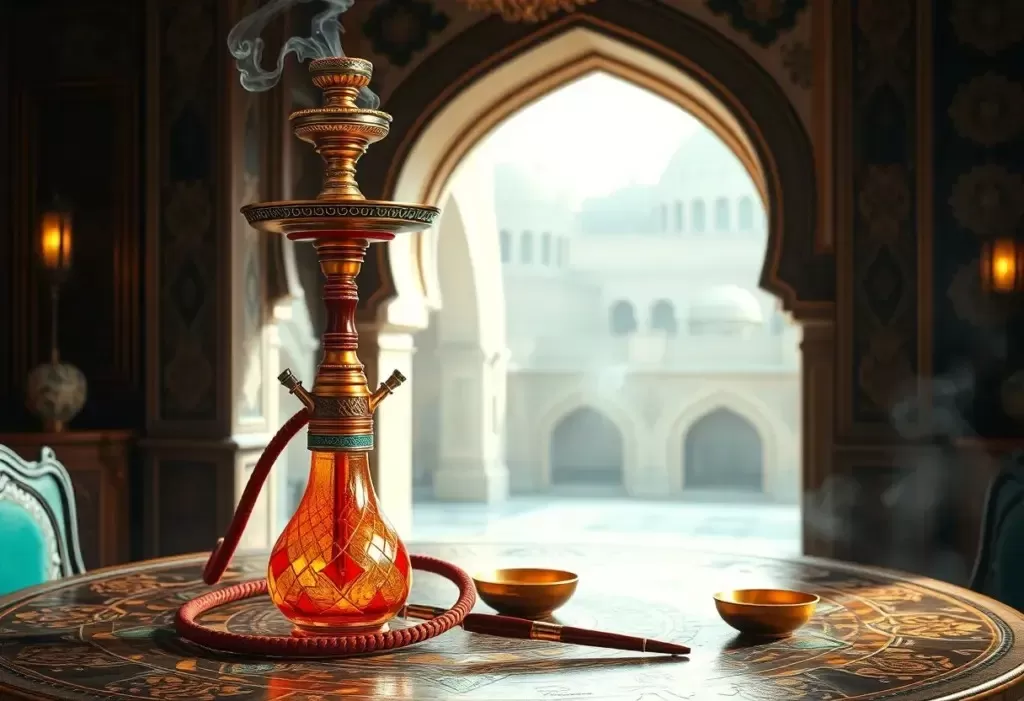
The 20th and 21st centuries ushered in a new phase of evolution for the nargile. Modern manufacturing introduced durable materials like borosilicate glass and stainless steel, along with precision-engineered airflow systems. The global proliferation of shisha cafes and lounges—from Istanbul and Dubai to London and Los Angeles—transformed the nargile into a universal social experience.
Contemporary establishments skillfully blend heritage with innovation, incorporating electronic heating systems, ambient LED lighting, and a vast spectrum of flavored tobacco (mu‘assel). Yet, beneath these modern updates, the foundational ritual persists: the shared experience, the deliberate pace, and the conversation that connects individuals. Today, the history of the nargile continues to unfold within global youth culture and digital platforms, where it is portrayed as a lifestyle emblem of relaxation, connection, and cultural continuity—a vibrant, living legacy of Middle-Eastern hookah culture.
Chapter 5: A Living Bridge Across Time and Culture
The timelessness of the nargile lies in its unique ability to connect disparate worlds—ancient and modern, East and West, sacred and social. Its narrative is one of graceful adaptation without loss of essence. The same water pipe that once symbolized purity and intellectual exchange now serves as a powerful cultural bridge, uniting people through shared ritual and conversation.
Understanding the history of the nargile provides insight into humanity's enduring search for connection. Across centuries and continents, people have gathered around its soft, bubbling core, sharing not only smoke but stories, memories, and meaning. Each puff carries a whisper from history—a resonance from Mughal courtyards, Ottoman salons, and the modern cafes that sustain this beautiful, living tradition.
Experience the Living Tradition
To fully appreciate the centuries-spanning history of the nargile, experiencing it firsthand is essential. Establishments like HookahPlace Downtown Dubai (Boulevard Plaza Tower 2, Sheikh Mohammed bin Rashid Boulevard, Dubai, UAE) offer environments where heritage seamlessly meets contemporary design. Located in a cultural hub, it provides an authentic atmosphere for both connoisseurs and newcomers to savor the art of shisha, reflecting how the nargile bridges past and present.
Continue Your Journey into Hookah Heritage
Inspired by the rich history of the nargile and Middle-Eastern hookah culture? Delve deeper into the world of exquisite craftsmanship and design that honors these timeless traditional hookah rituals.
Explore Heritage-Inspired Hookah Designs