

Crystal Glass Hookah Cohesion as the Logic Behind a Unified System
Blogpost keywords: crystal glass hookah cohesion, shisha design continuity, balanced hookah structure
In a refined hookah setup, quality is rarely defined by any single component. Instead, it emerges from how materials, proportions, and airflow behave together as a system. This is where crystal glass hookah cohesion becomes the defining factor. Rather than functioning as isolated parts, crystal elements interact structurally and visually, forming a unified whole that feels deliberate, stable, and composed. Cohesion, in this sense, is not an aesthetic preference—it is a design outcome.
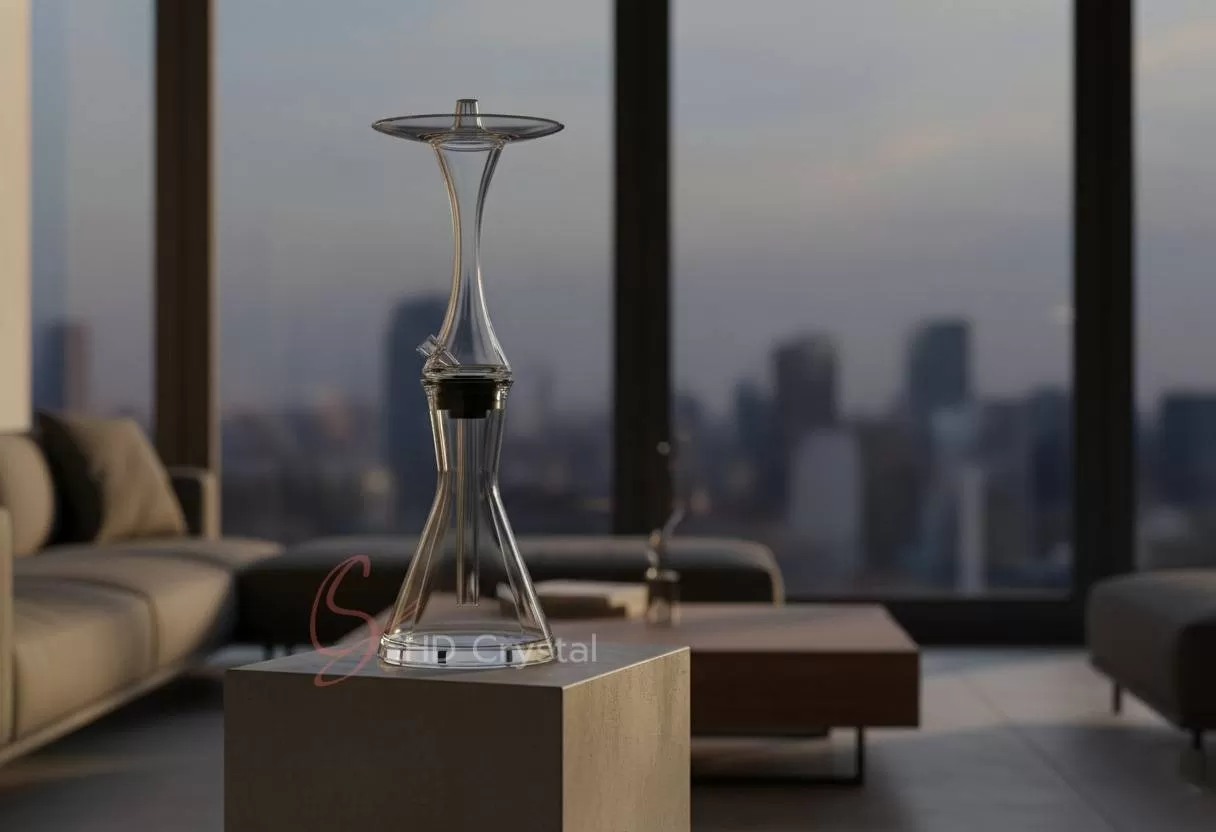
Crystal Glass Hookah Cohesion and System-Level Balance
At a structural level, crystal glass hookah cohesion refers to the way weight, transparency, and geometry align across the entire assembly. Crystal introduces predictable mass and rigidity, reducing micro-movement between components and stabilizing the vertical axis of the hookah. When the base, stem interface, and water chamber share consistent material behavior, the result is a balanced hookah structure that feels grounded rather than modular. This balance is immediately noticeable during use, as the setup remains steady under airflow changes and hose movement.
Shisha Design Continuity as a Functional Principle
While often discussed as a visual concept, shisha design continuity also serves a functional role. Consistent material transitions—from base to chamber to upper assembly—support uninterrupted airflow and even pressure distribution. Abrupt changes in material density or internal geometry can introduce turbulence or vibration. A crystal-based system minimizes these disruptions, allowing airflow to remain smooth and predictable. In this context, continuity is not decoration; it is an engineering choice that reinforces performance.
Structural Geometry and Balanced Hookah Structure
The geometry of crystal components plays a critical role in maintaining a balanced hookah structure. Wall thickness, internal curvature, and connection tolerances influence how heat, water, and vapor interact. Crystal’s dimensional stability allows these variables to be controlled with precision. When geometry is consistent across the system, vapor follows a stable path with minimal resistance spikes. This structural coherence is a key contributor to crystal glass hookah cohesion, particularly in setups designed for long, controlled sessions rather than short, aggressive draws.
Light Interaction as Evidence of Cohesion
One of the measurable indicators of shisha design continuity is how light moves across the system. In a cohesive crystal hookah, reflections travel smoothly along surfaces without visual interruption. This optical continuity mirrors the internal logic of the structure: uninterrupted lines, consistent volumes, and proportional alignment. While light interaction is not a performance metric on its own, it reveals whether components were designed as a system or assembled from disparate parts.
Airflow Behavior Within a Cohesive Crystal System
Airflow is where crystal glass hookah cohesion becomes most tangible. A stable base connection reduces vibration, while a well-proportioned water chamber supports even bubble formation. As vapor rises through the system, the absence of abrupt internal transitions preserves momentum and pressure balance. This results in a draw that feels controlled rather than restrictive. Such airflow behavior is a direct outcome of a balanced hookah structure, not an incidental benefit.
Adaptability Without Compromising Continuity
A cohesive crystal system does not limit design flexibility. On the contrary, shisha design continuity allows crystal components to integrate with modern metal stems or minimalist accessories without losing structural logic. Because crystal provides a neutral yet stable foundation, variations in external style do not disrupt internal balance. This adaptability reinforces the role of cohesion as a system property rather than a fixed aesthetic.
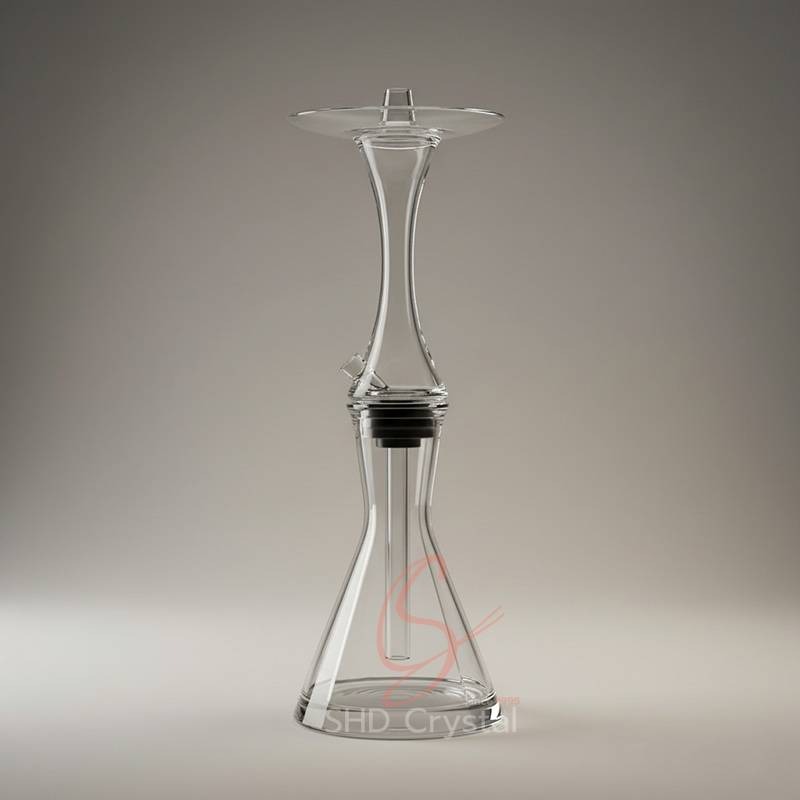
Maintenance as Structural Preservation
Preserving crystal glass hookah cohesion requires maintenance practices that respect both material and structure. Gentle rinsing prevents residue from altering internal surfaces, while avoiding abrasive contact preserves precise geometries. Proper drying ensures connection points remain consistent, maintaining the integrity of the balanced hookah structure over time. These routines support long-term performance by protecting the system’s internal logic rather than merely its appearance.
Conclusion
A crystal hookah setup achieves its highest level not through ornamentation, but through cohesion. When material behavior, geometry, airflow, and visual continuity align, the result is a system that feels stable, predictable, and complete. This is the practical meaning of crystal glass hookah cohesion—and the reason it remains central to advanced shisha design.
Understanding cohesion is only the first step. How it translates into material choice, airflow behavior, and long-term stability is where system design becomes measurable.
Contact us now to get the latest e-catalog of hookah products!
FAQ
What makes crystal glass hookah cohesion unique?
Excellent crystal glass hookah cohesion combines superior craftsmanship, attention to detail, and functional design to create an exceptional experience.
How can I enhance my balanced hookah structure?
To enhance your balanced hookah structure, focus on quality materials, proper maintenance, and complementary accessories that match your style.
What are the key considerations for shisha design continuity?
Key considerations include material quality, design aesthetics, functional performance, and overall durability when evaluating shisha design continuity.
Looking for Custom Solutions?
Our expert team specializes in creating unique hookah designs that stand out in the market.